Math112BKK
Discrete Math
Faculty
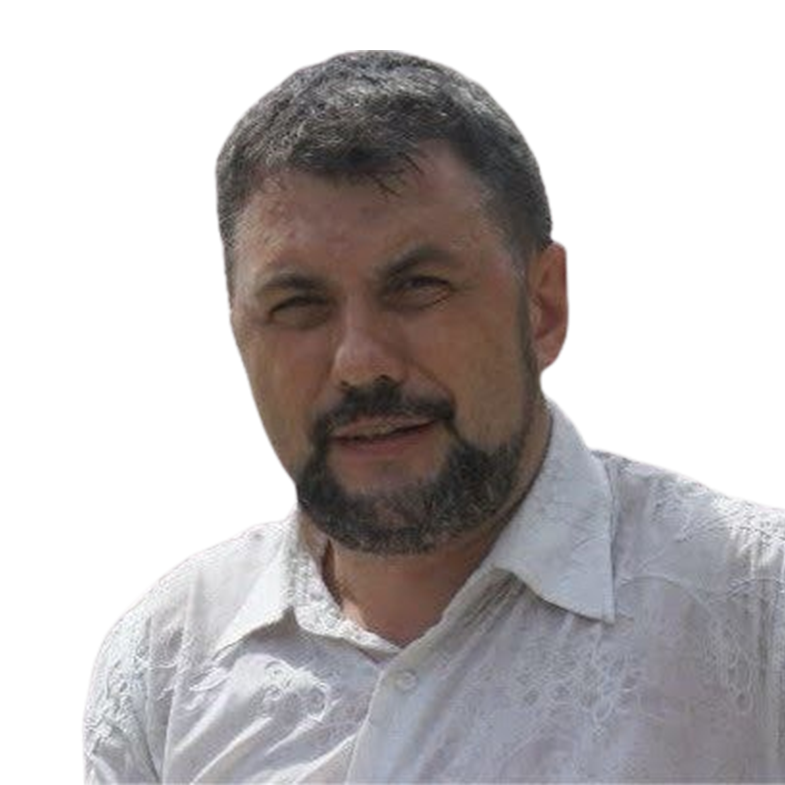
Andrey Kechin
Master of Science fellow
Course length
Duration
Total hours
Credits
Language
Course type
Fee for single course
Fee for degree students
Skills you’ll learn
Overview
Discrete Mathematics is a fundamental course that explores mathematical structures that are distinct and separate rather than continuous. Boolean algebra and propositional logic are used to develop reasoning skills essential for computer science and problem-solving. The study of algorithms and their efficiency is crucial in understanding computational complexity. Combinatorial techniques help in counting and organizing data systematically. Graph theory provides tools for modeling networks, relationships, and connections in real-world applications. Recursion and mathematical induction are used to prove statements and solve complex problems. Discrete probability introduces methods for analyzing uncertain events and decision-making. The course has broad applications in cryptography, artificial intelligence, and data structures. Mastering discrete mathematics enhances logical thinking and is essential for careers in mathematics, engineering, and computer science.
Learning highlights
- By mastering the course, students gain the ability to think critically and write effective code with a deep understanding of:
- Logic statements
- Set theory
- Proving a mathematical concept formally
- Principles of recursion
Course outline
15 classes
Logic
Boolean algebra.
Logic circuits.
Set theory
Set relations.
Venn diagrams.
Set functions
Definitions of function.
Arrow diagrams, Boolean functions.
One-to-one and onto functions.
Boolean algebra and set theory
De Morgan's Laws.
Partial order relations.
Proof techniques I
Direct proof and counterexample.
Proving universal statements, common mistakes.
Conjecture, proof and disproof.
Proof techniques II
Indirect argument: contradiction and contraposition.
An algorithmic language.
Review and Midterm
Review and Midterm.
Recursion
Mathematical induction.
Proving divisibility properties.
Graphs I
Basic terminology and examples.
Concept of degree.
Paths and circuits.
Graphs II
Matrix representations.
Matrices.
Trees and isomorphism.
Number theory
Properties of rational numbers.
Divisibility.
Unique factorization theorem.
Group theory and its application in number theory
The irrationality.
Quotient-remainder theorem.
Discrete probability
Sample space and event.
Possibility trees.
Probability Axioms.
Bayes Formula and independent events.
General review
General review.
Final exam
Final exam.
Course materials
Books
Prerequisites
Basics of Mathematics
Algebra and Number Theory I
Probabilities and Combinatorics
Methodology
The methodology is based on mixing PBL (problem-based learning) and IVL (interactive and visual learning) technologies.
PBL is based on presenting real-world problems and guiding students to apply discrete math concepts like graph theory or combinatorics to solve them. IVL technology considers using visualisation tools in lecture studies.
Each class can be divided into three parts:
- Lection part
- Active learning (discussion, Q&A)
- Problem-solving part
Students are encouraged to solve a task during the class that follows the homework. The homework is discussed at the beginning of the following class. The Exams is splitted into two parts: theory and practice. 1/3rd of the score is theory 2/3 is practice.
Grading
Andrew graduated from Siberian Federal University and obtained the Master of Science degree in Physics in 2021.
The scientific interests are in biophysics, medicine, and modelling of real biology features in-silico. The master article is devoted to the quantum modelling of an Endothelial Growth Factor Receptor`s ligand as a target for positron emission tomography. Andrew is an awardee of a students olympiad and an active member of a math book translation team.
See full profileApply for this course
Discrete Math
by Andrey Kechin
Total hours
45 Hours
Dates
May 18 - Jun 05, 2026
Fee for single course
€1500
Fee for degree students
€750
How to secure your spot
Complete the form below to kickstart your application
Schedule your Harbour.Space interview
If successful, get ready to join us on campus
FAQ
Will I receive a certificate after completion?
Yes. Upon completion of the course, you will receive a certificate signed by the director of the program your course belonged to.
Do I need a visa?
This depends on your case. Please check with the Spanish or Thai consulate in your country of residence about visa requirements. We will do our part to provide you with the necessary documents, such as the Certificate of Enrollment.
Can I get a discount?
Yes. The easiest way to enroll in a course at a discounted price is to register for multiple courses. Registering for multiple courses will reduce the cost per individual course. Please ask the Admissions Office for more information about the other kinds of discounts we offer and what you can do to receive one.